

Speeding and Distraction
Almost all car crashes go back to speed, distraction or possibly both. For every single car crash, at least one of the drivers was too fast, too distracted and didn’t pay attention. At least one driver couldn’t stop in time, which would be required by law. When your UN Envoy for Road Safety is Formula One’s Jean Todt, it is understandable that world leaders don’t seem too interested in lowering speeds. Instead everybody is trying to provide more and more “safety tools”, so cars can keep speeding and drivers can keep texting.
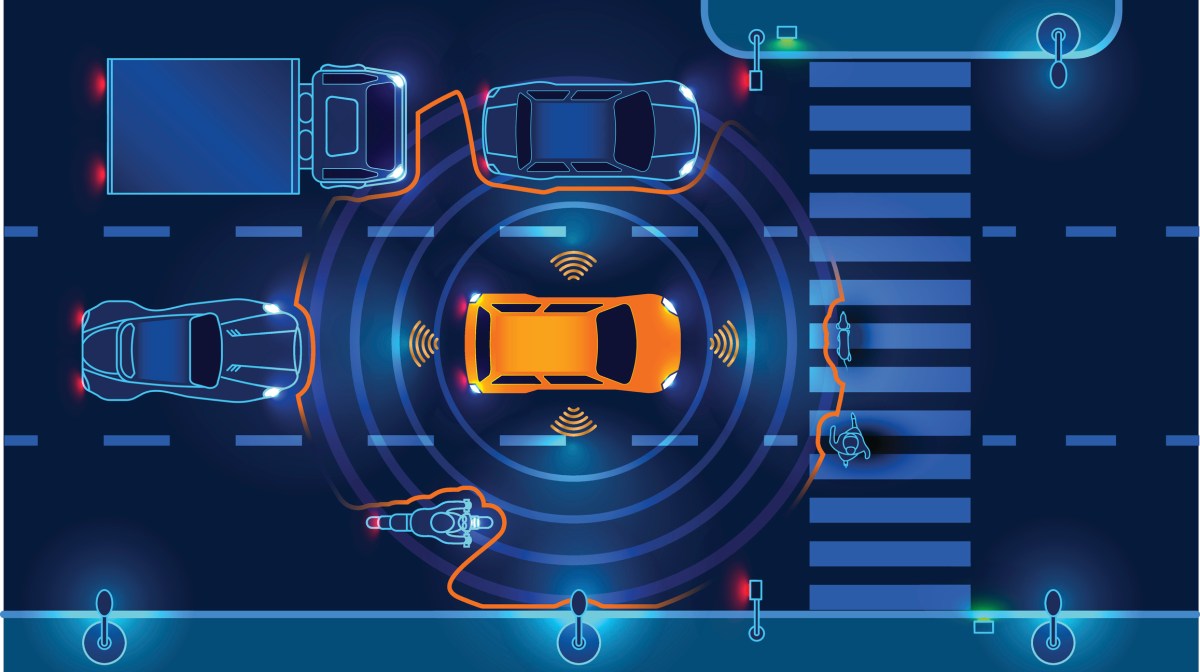
The recent discussions about robotaxis, self-driving vehicles, and autonomous vehicles in San Mateo County reminded me of a paper published by the American Automobile Association (AAA) about all the things drivers need today to keep themselves and others safe. They call these Advanced Driver Assistance Systems (ADAS), and all new cars have at least some neatly wrapped in a package. Each vehicle brand has a different name for a different set or package of systems. There is AcuraWatch, HondaSensing, Lexus Safety System+, Safe and Smart Package (Ford), i-ACTIVESENSE (Mazda), Intelligent Drive (Mercedes-Benz), Intelligent Safety Shield (Nissan), Enhanced Autopilot (Tesla), Safety Sense (Toyota). Just imagine how much each manufacturer paid some ‘Mad Men’ team to develop all these names.
AAA researched the tech behind these names and those used by government agencies (NHTSA) and various consortiums (SAE) and suggested which name should be used by all of them. Adaptive Cruise Control, for example, is a name used by many car manufacturers already, but there are some exceptions:
- Smart Cruise Control (Hyundai, Genesis)
- Distance Control (BMW)
- Intelligent Cruise Control (Nissan, Infinity)
- Adaptive Cruise Control Plus (Alfa Romeo)
- Dynamic radar cruise control (Lexus)
- Distronic Plus (Mercedes)
- Radar Cruise Control (Mazda)
- Traffic-Aware Cruise Control (Tesla)
Here are AAA’s suggestions for naming and definitions for all these different vehicle safety features.
Category: Automated Driving Tasks
A) Adaptive Cruise Control (ACC)
Definition: Controls acceleration and/or braking to maintain a prescribed distance between it and a vehicle in front. May be able to come to a stop and continue.
B) Lane Keeping Assistance1 (LKA)
Definition: Controls steering to maintain vehicle within driving lane. May prevent vehicle from departing lane or continually center vehicle.
C) Dynamic Driving Assistance (DDA)
Definition: Controls vehicle acceleration, braking, and steering. SAE standard definition of L2 Autonomous systems outlines this functionality.
Category: Collision Alerts
A) Forward Collision Warning (FCW)
Definition: Detects impending collision while traveling forward and alerts driver.
B) Lane Departure Warning
Definition: Monitors vehicle’s position within driving lane and alerts driver as the vehicle approaches or crosses lane markers.
C) Blind Spot Warning (BSW)2
Definition: Detects vehicles to rear in adjacent lanes while driving and alerts driver to their presence.
D) Rear Cross Traffic Warning (RCTW)
Definition: Detects vehicles approaching from side and rear of vehicles while traveling in reverse and alerts driver.
E) Parking Obstruction Warning
Definition: Detects obstructions in close proximity to vehicle during parking maneuvers.
F) Pedestrian Detection
Definition: Detects pedestrians in front of vehicle and alerts driver to their presence.
Category: Collision Mitigation (CM)
A) Forward Automatic Emergency Braking
Definition: Detects potential collisions while traveling forward and automatically applies brakes to avoid or lessen the severity of impact.
B) Reverse Automatic Emergency Braking
Definition: Detects potential collision while traveling in reverse and automatically applies brakes to avoid or lessen the severity of impact.
C) Automatic Emergency Steering
Definition: Detects potential collision and automatically controls steering to avoid or lessen the severity of impact.
Parking Assistance
A) Semi-automated Parking Assistance (SAPA)
Definition: Controls steering during parking. Driver responsible for acceleration, braking, and gear position. Maybe capable of parallel and/or perpendicular parking.
B) Fully-automated Parking Assistance (FAPA)
Definition: Controls acceleration, braking, steering, and shifting during parking. Maybe capable of parallel and/or perpendicular parking.
C) Remote Parking (RP)
Definition: System parks vehicle without driver being physically present inside the vehicle. Automatically controls acceleration, braking, steering, and shifting.
D) Trailer Assistance (TA)
Definition: System that assists driver during backing maneuvers with a trailer attached.
E) Surround View Camera3 (SVC)
Definition: Uses cameras located around vehicle to present view of surroundings
Misc Driving Aids
A) Automatic High Beams (AHB)
Definition: Deactivates or orients headlamp beams automatically based on lighting, surroundings, and traffic.
B) Night Vision & Pedestrian Detection (NV & PD)
Definition: A system that aids driver vision at night by projecting enhanced images on instrument cluster or heads-up display.
C) Driver Monitoring (DM)
Definition: Monitors driver condition by various means to detect drowsiness or lack of attention.
E) Body Mass Index Sensor (BS)
Definition: To be used by ride-hailing and ride-sharing services to calculate fares.
But wait, there is still more
Rear Seat Occupant Alert, Drowsiness Detection, Automatic Windshield Wipers, Traffic Signal Recognition (TSR), Alcohol Detection Technology.
Drivers need help
Motorists need our empathy and help to keep speeding, and the automobile industry wants to do its part. If you learned absolutely nothing from this blog, here is something I want you to remember. Pedestrians and people on bicycles don’t need SAPA, FAPA, TA, RP, SVC, AHB, DM, RCTW, BSW, LKA, TSR, NV&PD, CM, ACC, DDA, FCW, nor do they need ACC. Nobody even needed traffic light intersections or STOP signs until the invention of the motor vehicle.
The reason is that when a motorist with a 4,000-lb weapon is distracted, it can become dangerous for many people. whereas when pedestrians or cyclists are doing dangerous things, they will only harm themselves.
Find the Fake!
All these features sound fantastic. Only one of these features isn’t real – can you find it?
So, what is the problem with ADAS? Why haven’t they led to a reduction in road traffic deaths? To actually make a difference in safety statistics, all these features need to be turned on by default. If a drunk driver steps into a car thinking, “I better turn on all safety features,” and finds all the buttons to do so, he is probably still sober enough to order a Robotaxi.
And coincidentally, your friendly neighborhood Waymo robot driver is probably the only one who is always sober enough to turn on all of these features. This begs the question, when did the Board of Supervisors find its voice on road safety? We can trust a Waymo equipped with lidar and all these other safety features way more than the average, regular driver around here. If San Mateo Supervisors want more ‘local control over safety‘, how about installing a few bike lanes here and there. Little less Conversation and a little more action, please.
More Information:
- KBB: Adaptive Cruise Control
- AAA: ADAS Research Report
- AAA: The cost of ADAS
- Consumer Report: Alcohol Detection System
- Some of the other known names for Lane Keeping Assistance are Active Steering Assist, Audi Active Lane Assist, Intelligent Lane Intervention, Lane Departure Alert with Steering Assist, Lane Keep Assist, LaneSense, Lane Departure Warning Plus ↩︎
- aka Active Blind Spot Assist, Audi Side Assist, Blind Spot Information System, Blind Spot Intervention, Lane Change Alert with Side Blind Zone Alert, Lane Change Assistant (Side Assist), Smart Blind Spot Detection ↩︎
- aka Surround View System, 360⁰ View Monitor, Intelligent Around View Monitor, Multi-terrain Monitor, Bird’s Eye View Camera, Surround Vision, Top View Camera System, Wide Front View & Side Monitor ↩︎
Editor’s Note: The views and opinions expressed in all blog posts are those of the authors and do not necessarily reflect those of the Redwood City Pulse or its staff.


